What are SuDs?
SuDS mimics nature and typically manages rainfall close to where it falls. SuDS can be designed to transport (convey) surface water, slow runoff down (attenuate) before it enters watercourses, provide areas to store water in natural contours, allow water to soak (infiltrate) into the ground, evaporate from surface water and lost or transpired from vegetation (known as evapotranspiration) as well as encourage attenuation of contaminants which can improve water quality.
SuDS
can be used to control and remove silts generated by surface water run-off from
construction projects. However care is needed.
For more information go to https://www.netregs.org.uk/environmental-topics/water/sustainable-drainage-systems-suds/construction-phase-suds/
SuDs components
SUDS includes a number of components. Most of these are “green”, “soft” or “landscaped” and soil is an important component. These include:
Source control
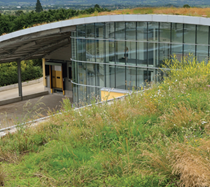
- Green roofs: rooftop drainage and waterproofing systems that are covered with vegetation, usually specific plants that are selected to survive in what is mainly quite a dry environment
- Brown (biodiverse) roofs: a type of green roof designed to encourage local diversity, and for example a means of replicating important ecological habitats often found on brownfield site when subject to redevelopment.
- Green walls: vertical structures that have different types of plants or other greenery attached to them.
Swales and conveyance channels
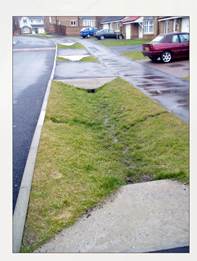
- Swales: hallow grassed or vegetated channels used to collect and/or move water. The shallow side slopes and flat bottom means that for most of the time water flows in a thin layer, some of them can be under drained with the use of perforated pipe. Swales can also provide some storage and filtration.
Filtration
- Filter strips: gently sloping, vegetated strips of land that provide opportunities for slow conveyance and infiltration (where appropriate). They are designed to accept runoff as overland sheet flow from upstream development and often lie between a hard-surfaced area and a receiving stream, surface water collection, treatment or disposal system
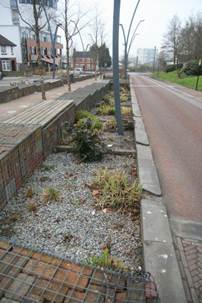
- Bioretention areas: shallow landscaped depressions which are typically under drained and rely on engineered soils, enhanced vegetation and filtration to remove pollution and reduce runoff downstream.
Infiltration
- Rain garden: small depressions in the ground that can act as infiltration points for roof water and other ‘clean’ surface water – i.e. water that is low in contamination levels. Rain gardens should be planted up with native vegetation that is happy with occasional inundations.
- Infiltration basins: vegetated depressions designed to store runoff on the surface and infiltrate it gradually into the ground. They are dry except in periods of heavy rainfall.
Retention and detention
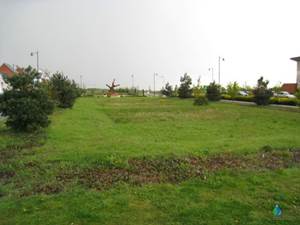
- Detention basins: surface storage basins or facilities that provide flow control through attenuation of stormwater runoff. They are normally dry but can also be ‘mixed’ i.e. including both a permanently wet area for wildlife or treatment of the runoff and an area that is usually dry to cater for flood attenuation.
- Retention ponds - can provide both stormwater attenuation and treatment. They are designed to support emergent and submerged aquatic vegetation along their shoreline.
Wetlands
Wetlands are densely vegetated water bodies that use sedimentation and filtration to provide treatment of surface water runoff.
